Guide
Why an AC stops cooling
A running system that blows warm air usually has one of a short list of problems. Some you can check; others need a contractor.
Start with the cheap checks
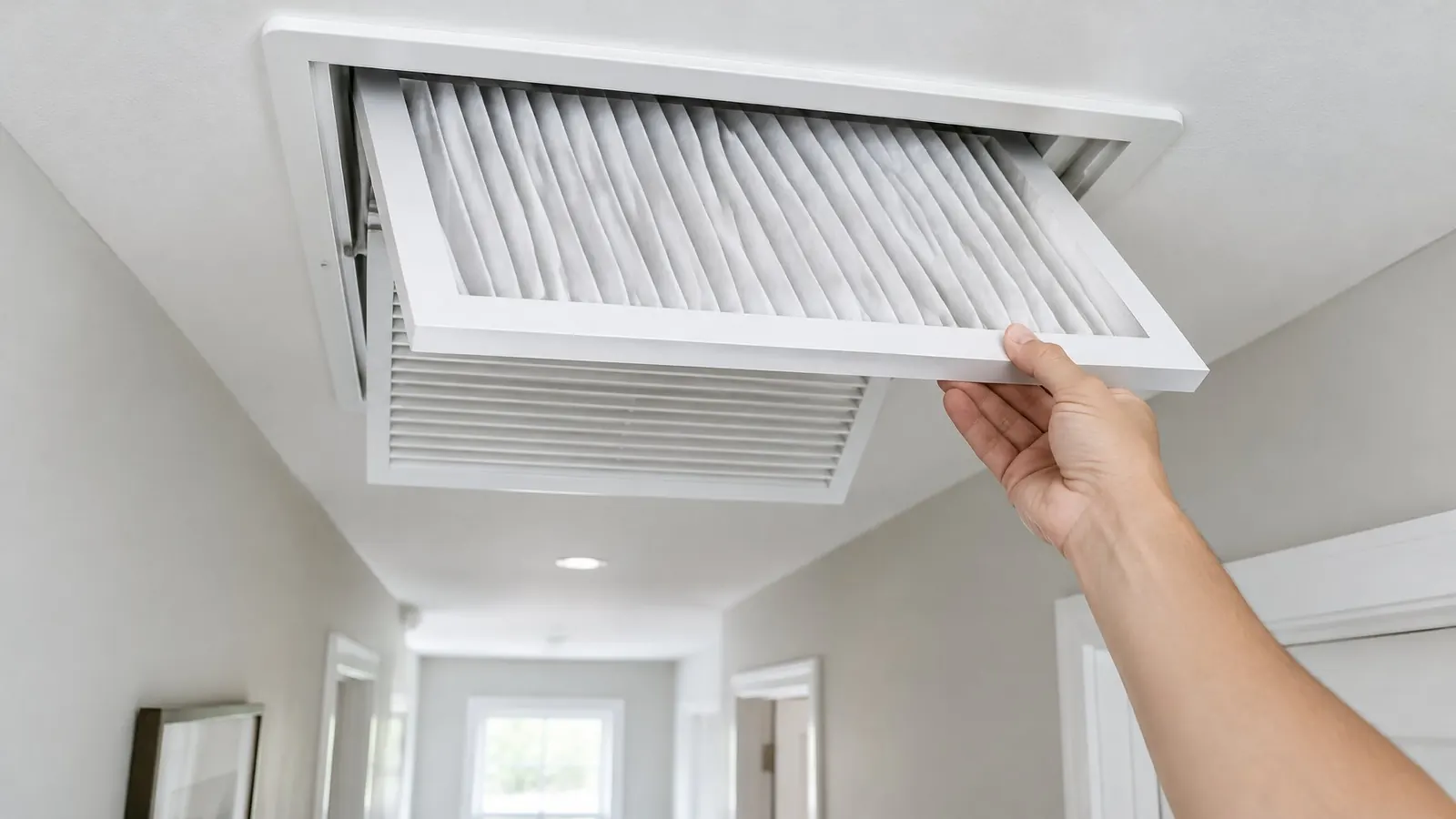
The Department of Energy lists a clogged filter, a wrongly set thermostat and a clogged drain among the things to check on a cooling system. A loaded filter restricts airflow and reduces cooling.
- Filter: pull it out and look. If you cannot see light through it, replace it.
- Thermostat: confirm it is set to cool and reads a plausible temperature.
- Breaker: reset once if it tripped. If it trips again, stop and call.
- Condensate drain: water in the pan or a wet ceiling points to a blocked line.
Source: Energy Saver 101.
Frozen coil
Ice on the indoor coil or the refrigerant line means air or refrigerant is not moving as it should. Switch the system off and let the ice melt. Running it frozen can damage the compressor.
Dirty outdoor coil or blocked unit
The outdoor unit rejects the heat from your house. Leaves, cottonwood fluff, grass clippings or a fence built too close choke it. Clear loose debris with the power off. Anything beyond that is the contractor's job.
Failed capacitor or fan motor
If the indoor blower runs but the outdoor fan does not, the capacitor or the fan motor may have failed. These are common repairs and the parts are modest compared with the compressor.
Low refrigerant
A system does not burn refrigerant, so low levels mean a leak. Adding refrigerant without finding the leak is a temporary patch. Ask the contractor where the leak is and what repairing it involves.
Ducts and the attic
Attic ducts that have come loose, been crushed or lost their insulation can drop cooling on the far end of the house. The Department of Energy lists leaky or constricted ducts as a reason to bring in a professional.
An old or undersized system
Some systems cool as well as they ever will and still cannot keep up, because the house has changed or the unit has aged. A contractor can tell you which it is.
The repair or replace guide explains how to weigh that.
Ready to talk to an independent HVAC contractor?
Dial the number and say what the system is doing. The call connects you with an independent contractor who serves Leander and nearby towns.