Cooling
AC installation and replacement in Leander, Texas
A new system is a large purchase made once in many years. Call to talk it through with an independent HVAC contractor who works in Leander.
When replacement is the sensible route
Replacement makes sense when the cost of fixing the next failure approaches the cost of a new system, when the outdoor unit and the indoor coil no longer match, or when the house itself has changed. An addition, a finished attic or a new roof color can all shift the load.
The Census Bureau's estimates base for April 2020 was 59,235 residents and its July 2025 estimate is 91,132, so the age of the equipment varies a lot from one street to the next.
- Repairs have repeated within a single season.
- The compressor or the indoor coil has failed.
- The system cools the house unevenly even after cleaning and a duct check.
- The equipment uses a refrigerant that the contractor says is getting harder to source.
Population figures are U.S. Census Bureau estimates (city and town estimates).
Sizing is a calculation, not a guess
Bigger is not better. The Department of Energy says an oversized air conditioner performs less efficiently and effectively than a smaller, properly sized unit, and tells owners to work with the contractor to determine the correct size.
A reputable contractor measures the house, notes the windows, insulation and attic, and runs a load calculation. Ask to see it. A quote that sizes the unit by matching the old one skips that step.
Source: the 2022 Energy Saver guide.
The parts of a central system
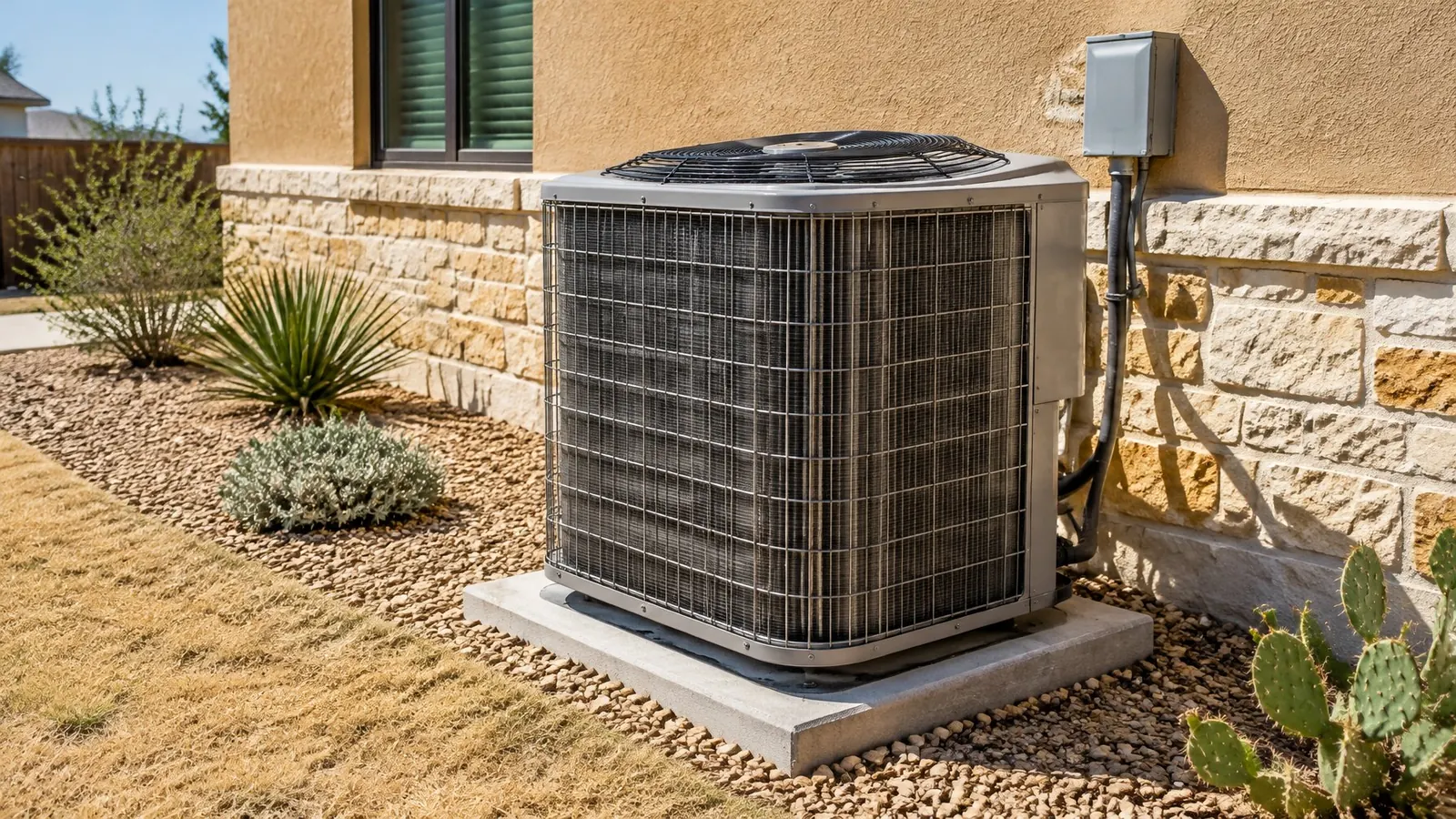
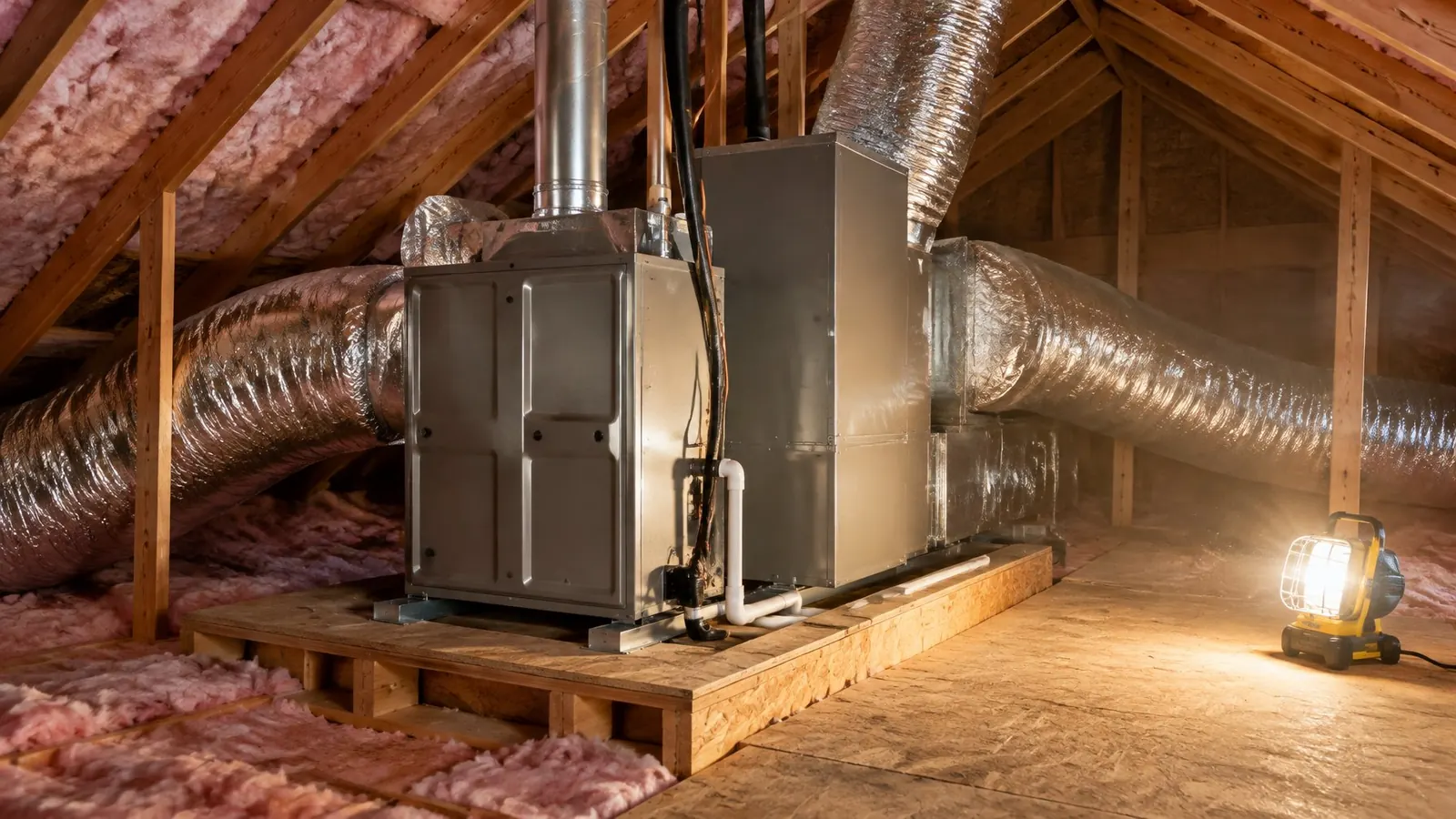
A central system has an outdoor unit that holds the compressor and condenser coil, an indoor coil, a blower, and the duct network that moves the air. In much of Texas the indoor part sits in the attic.
A replacement can change all of it or only part. Replacing the outdoor and indoor pieces together keeps them matched. Changing only the outdoor unit can leave a mismatch that costs efficiency, so ask which pieces the quote covers.
Ductwork decides how well the new system works
Ducts that leak or run through a hot attic waste cooled air. The Department of Energy says leaking or constricted ducts are worth sealing with a professional. A new system on tired ducts will still struggle.
Ask the contractor to test the duct system or at least inspect it for crushed runs, loose joints and missing insulation. Ask for the findings in writing.
Attic installs
An attic handler needs a safe platform, clear access and a drain setup that cannot flood the ceiling below. Some installs add a secondary drain pan and a float switch that shuts the system off if water backs up.
Ask where the drain line ends and whether the pan has a safety switch.
Permits and paperwork
The city where the house stands sets its own permit rules for replacing HVAC equipment. Ask the contractor whether the work needs a permit and who will apply for it. Ask what inspection follows, if any.
Keep the signed scope of work and the model and serial numbers. Ask whether the manufacturer's warranty needs to be registered, and by when.
What changes the cost
Equipment tier, system size, the number of stages in the compressor, duct repairs, a new platform or pan in the attic, a new thermostat, electrical work and a permit all move the figure. So does how hard the access is.
No page on this site lists prices. Get two or three written scopes that cover the same pieces and compare line by line.
Questions to settle before you sign
Which pieces are being replaced?
Outdoor unit, indoor coil, blower, thermostat and pad.
Was a load calculation done?
Ask for the numbers or a summary.
What happens to the ducts?
Inspect, test, seal or leave alone, in writing.
Who handles the permit?
Ask who applies and who is at home for the inspection.
What does the warranty cover and for how long?
Parts and labor are often covered separately.
Questions people ask
Can a new system be installed in an old house with no ducts?
A contractor can tell you after seeing the house. The call connects you with an independent company that can assess it.
Is a higher efficiency rating worth it in Leander?
Long cooling seasons mean the system runs a lot, so efficiency repays faster than in a mild climate. How much depends on the equipment and your usage, so ask each contractor to show the figures.
How long does an installation take?
That depends on the system, the attic and the duct work. The contractor can give you a plan for your house.
Ready to talk to an independent HVAC contractor?
Dial the number and say what the system is doing. The call connects you with an independent contractor who serves Leander and nearby towns.